Doujin ACT Adult Game Review: Can It Balance Playability and Practicality?
Reviewing popular indie ACT adult games on DLSite, offering a comprehensive analysis covering gameplay feel, level design, H-scene trigger mechanics, and overall practicality.
As a seasoned veteran who has been navigating Steam and DLSite for over 15 years, I know all too well the most common pain points in the doujin ACT scene: a thumbnail that looks absolutely lewd, GIFs that seem amazing, but once you’re in the game, the combat feels like you’re swinging at air, and the character moves as stiffly as a marionette. Many circles blindly worship “practical usability” above all else, forgetting that in the term “action game,” the gameplay experience is the skeleton; if the skeleton isn’t well-formed, even the spiciest H-scenes are just a pile of rotten flesh.
Gentlemen, today we aren’t talking about those trash games that look like AAA masterpieces but run like a slideshow. Instead, we’re going to conduct an in-depth dissection. The theme we’re tackling is quite incisive: Can a doujin action H-game truly achieve a balance between satisfying gameplay and practical usability? In other words, can a game make your little brother weep with emotion while you’re pulling off flashy combos with one hand?
This time, rather than focusing on a single specific title, we’ll use recent chart-topping phenomena on DLSite—titles rarely scrutinized from the perspective of a “hardcore ACT player”—as targets for a comprehensive review and analysis.
Game Background & Core Gameplay Mechanics Deconstruction
For an ACT player, the first second in a game isn’t about checking the boob physics; it’s about feeling the character’s jump start-up frames and landing recovery. If an adult ACT can’t even properly tune the inertia of a “double jump” or “air dash,” then it has no soul, no matter how well it shakes in bed.
We’ve observed that the top-tier doujin ACT titles in recent years, such as the widely discussed Witch of the Night of Revenge (Tsukino Mizu Kikaku) or the purely pixel-art action gem Eris Dysnomia, achieved their legendary status not because of luxurious H-scenes, but because they built the core gameplay itself into a competent Metroidvania or beat ‘em up.
- Map Design and Sense of Exploration: The best doujin ACTs (I have to mention Labyrinth City of the Demon Castle Lipuria here) feature map complexity and an abundance of hidden elements that can even rival, if not surpass, some commercial failures. Players are willing to spend 80% of their time just running through maps, slashing enemies, and unlocking skills, purely for the sense of achievement found in that “light at the end of the tunnel” moment.
- Impact Feel and Operational Feedback: This is the soul of any standard action game, and it’s equally crucial for adult-oriented ones. Excellent examples like SiNiSistar, despite its pixel art, combine the hit stop effect, splattering pixel fluids, and controller vibration feedback into a perfect offensive rhythm. In contrast, many poorly made 3D doujin ACTs have weapons clipping through monsters with no reaction or stagger animation; that kind of trashy feel can’t be saved even if everyone got naked.
- Boss Battle Design: This is where true skill is tested. A first-rate adult ACT boss battle is defined by its “non-erotic sense of pressure.” For example, against powerful enemies in the Dead End Colosseum series, your palms sweat because of the boss’s fierce attack patterns, not because it looks ugly. When an H-game’s boss fight makes you view the H-scene as a reward for clearing the stage, the game has already won mechanically.
Art Style & Gentlemen’s Element Evaluation (In-Depth Usability Analysis)
Being adult-oriented, we must eventually return to the “needs of the little brother.” But the evaluation standard here is: Are the H-scenes a stumbling block interrupting your game’s rhythm, or the driving force pushing you forward?
The current market mechanisms roughly fall into three types, each affecting gameplay feel differently:
- Defeat Trigger (Ryona/Reverse Rape Mainstream): The most common trigger mechanism. This type of game easily falls into a trap: players must intentionally lose to see the CGs. This is a fatally disjointed design for an action game.
- Positive Feedback Design: Superior works render H-scenes in real-time. Instead of being forced into a static CG, you are grabbed (grappled) by a monster during combat and must use escape systems (QTE, rapid button mashing, spending MP) to break free. This preserves the action game’s tension. The Guilty Hell series is a textbook example here. While you’re frantically working the controller, the monster is also frantically “suppressing” you in the most literal, physical sense.
- Stage Reward / Affection System: Pure love or reverse seduction scenes in town areas. This serves as a change of pace and doesn’t affect gameplay; as long as the art style is good and the Live2D animations are smooth enough, it’s a plus.
- Dynamic H in Real-Time Combat: This tests programming skills the most. When your character, while swinging a sword, suffers clothing damage and movement imbalance due to accumulated status effects, it not only serves the visual aspect but directly impacts subsequent operational feel (slower movement speed, lower attack power). This is the true integration of “practical usability” into “playability.”
Regarding specific art styles, pixel art and high-resolution 2D illustration styles both have their fans. Personally, I believe pixel art often acts as a talisman guaranteeing good game feel in the ACT category. Circles choosing pixel art usually prioritize frame rate and fluidity. Games chasing high-resolution CGs, conversely, tend to suffer from frame drops. Unless it’s an IP on the scale of Monmusu Quest!, the cheap feel of 3D modeling rarely convinces my little brother. As for CV, if an ACT has full voice acting, that’s incredibly generous; but if only the H-scenes have panting and moaning, and the voice acting sounds natural (not that annoyingly screechy fake high pitch), then “usability” gets a 10-point boost. I strongly recommend wearing closed-back headphones when playing; ASMR-level sucking sound effects are often the crucial soul mark that sends one straight to heaven.
Purchase Notes, Value for Money, and Patching Guide
When buying doujin ACTs on DLSite, if you’re a Taiwanese player, please make sure to cultivate the following good habits:
- The Trial Version Is Your Savior: Doujin ACTs aren’t commercial products; there’s no major studio QA. Countless cases exist where the thumbnail looks godly, the trailer is edited to be super hype, but after downloading, your graphics card screams or the controls feel like crap. Over 80% of quality ACTs on DLSite provide a trial version. Be sure to use the trial to test your PC specs and the game feel. If you have a generic controller, the trial version immediately tells you if it supports XInput.
- Language Barrier and Patches: While DLSite doesn’t have the severe censorship and mosaic issues found on Steam (and usually provides uncensored versions directly), language is a major hurdle. If you don’t know Japanese and don’t want to struggle through untranslated raw text, prioritize titles with a “Multi-Language Support” tag. Alternatively, some circles sell the Japanese version on DLSite while locking content on other platforms (like Steam), requiring an additional “decensoring patch” to unlock R18 scenes; but on DLSite, what you buy is usually the uncensored complete version.
- Judging Value for Money: Don’t just look at the number of CGs. A pixel-art ACT selling for 2000 JPY that gives you 20 hours of gameplay offers far better value than a 1000-JPY game with 50 high-res CGs that you want to delete after 15 minutes. Pay attention to the file size. Unity engine games under 200MB usually lack content, with only a few rare exceptions.
Overall Verdict & Recommendation Summary
Returning to the initial proposition: Can doujin ACTs achieve a balance between gameplay feel and practical usability?
The answer is: Yes, but such titles are exceedingly rare and usually destined to be masterpieces.
The biggest drawback of this type of game is usually its “simplicity.” Compared to visual novel nukige focused on a single image, ACT doujins often sacrifice slightly in single-frame visual detail. Furthermore, the initial hour or two spent wandering the map learning skills acts as a prolonged warm-up period (foreplay) for players eager to get to the lewd stuff. However, once past that foreplay, the ensuing climax is a dual feast of satisfying operational achievement and physical release.
- If you enjoy SotN-style exploration: Go for titles with the Metroidvania tag.
- If you’re a side-scrolling Musou fan: High-difficulty action games in pixel art style are your thing.
- If you just want to look at images but still feel like pressing buttons: Avoid high-difficulty ACTs. Look for light action games with a “defeat equals corruption” theme, and don’t torture yourself.
Stop being a sucker who pays based solely on the preview thumbnails. As a veteran, prioritizing gameplay feel will make your little brother thank your brain for its wise decision.
Where to See / Acquire
To support the creators and get the most complete, uncensored adult experience, buying directly from DLSite is the absolute correct choice.
- Purchase Platform: DLsite Adult Section
- Recommended Search Keywords: Male-Oriented Doujin > Action
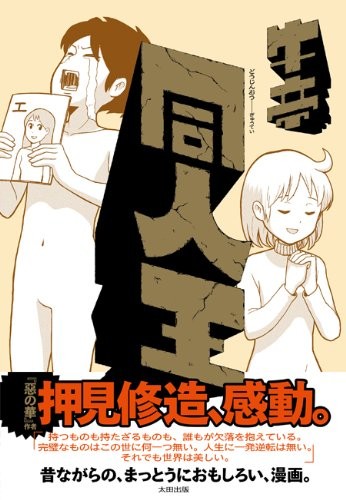
- Reference Cover Art: When searching, look out for visual styles depicting intense battle scenes, like those in Doujin Ou. Generally, if the cover composition is highly dynamic and the characters show a sense of motion blur, the in-game combat feedback often isn’t too bad.
(Cover image source: Ohta Publishing Doujin Ou cover illustration / bangumi record)