The Immortal Masterpiece of Commercial Bishoujo Games: Why "euphoria" Is Still Celebrated Today
A comprehensive analysis of CLOCKUP's representative work *euphoria* in terms of plot structure, character design, and music and art, exploring how it transcends its era to become a classic.
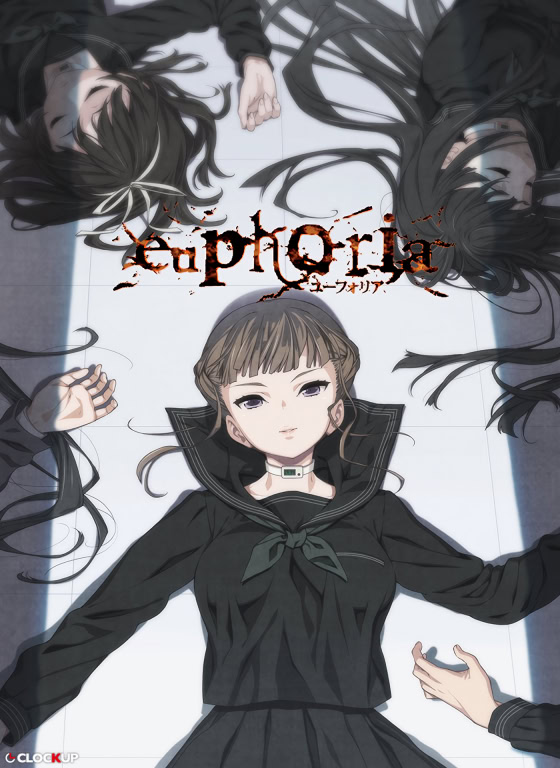
The iconic keyhole visual, the eerie white chamber, and the phrase “The game begins now” — even if you’ve never played euphoria, you’ve probably come across them in various online communities or meme images.
This 2011 release from CLOCKUP has long since transcended being just “a hardcore eroge” — it has become something of a legend. In the world of bishoujo games, most extreme guro-style nukige are played and forgotten, deleted after the thrill is gone. But euphoria is different. Its lingering impact is so intense that you’ll lose sleep for nights after completing it, and its reputation among story-focused players is deeply polarized — either hailed as a masterpiece, or deemed too twisted to touch again. However, one thing is certain: the discussion around it has never stopped. It is this persistent buzz that has cemented its place as an immortal classic in the commercial bishoujo game canon.
This review won’t just walk you through the famous scenes. I want to approach it with a tone closer to literary criticism, dissecting euphoria’s narrative structure, character arcs, art and music, and its profound influence on subsequent doujin and commercial works.
Game Background and Core Mechanic Deconstruction
Many people are put off by euphoria’s surface, with a first impression of “just another extreme underground training AVG.” But if you’ve actually played it, you’ll know the core of this game is not “degradation,” but rather “pure love and choice under extreme conditions.”
The story goes like this: protagonist Keisuke Takatou wakes up to find himself trapped with six women — childhood friend Kanae Hokari, class president Toko Ando, junior Rika Makiba, English teacher Natsuki Aoi, fellow classmate Rinne Byakuya, and classmate Nemesis Manaka — inside a mysterious white confinement facility. A cryptic voice forces them into a game called “Unlocking”: Keisuke must designate one of the women as the “keyhole” and carry out the system’s specified act to open the door to the next stage. Refusal to comply, or any attempt to escape, triggers the devices to immediately execute the defiant party.
This mechanic is chillingly brutal, but its design is remarkably clever. The core gameplay operates around standard ADV (text adventure) branching choices, except every single choice directly embeds a moral and survival dilemma. What seems like a simple route decision is actually, every time the player decides who becomes the “keyhole,” an interrogation of their own heart: Do I truly want to save everyone and escape, or am I actually satisfying a deeper desire for control?
For the visual novel genre, the handling of this script structure is quite mature. It doesn’t rush to bombard the player with excessive gore or explicit scenes right away, instead using flashbacks of “everyday moments” to build character depth. Those seemingly ordinary school memories with childhood friend Kanae Hokari, for example, take on a sheen of despair because of the current situation. This “sense of encroaching normality” is precisely the most difficult emotional tempo to master in confined-space scenarios, and euphoria nails it.
Special mention must be made of the “sadistic protagonist” design. Keisuke’s internal monologues are profoundly dark; you’ll find he actually harbors a pathological excitement towards the degradation scenarios. That internal conflict — “reason wants to save them, instinct wants to destroy them” — elevates this work far beyond the cheap feeling of the mindless sex-machine protagonists common in typical nukige. If you enjoy suspense narratives where “the protagonist himself is part of the problem,” this script’s experience will absolutely give you nightmares — but that’s a compliment.
Art Direction and Eroge Element Assessment (In-Depth Usability Analysis)
If you’re thinking of approaching euphoria as a “utilitarian” game, a word of warning upfront — this title’s erotic usability is indeed high, but it’s absolutely not your typical nukige. It’s that bizarre species where you’re “using it while feeling your stomach twist, and then continuing to use it.”
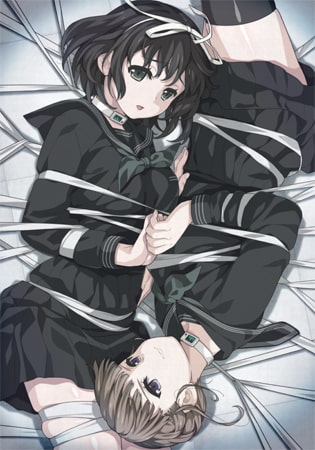
Shigeo Hamashima (CLOCKUP’s signature artist) delivers a highly distinctive art style in this work. The characters’ body lines are rounded and soft, with skin shading that has a subtle, moist sheen. The texture of being slick with sweat and bodily fluids pushes the sense of “immorality” and “physical stickiness” to a horrifying pinnacle in specific erotic scenes. Especially Nemesis Manaka, with those eyes that always seem calculating yet hold a hint of innocence — the still art alone constructs a terrifyingly captivating charm. The artwork doesn’t just depict “physical beauty”; it incorporates “mental distortion” as well.
In terms of fetish elements, the scope covered here is very broad, ranging from relatively mild bondage to extreme douche and electrostimulation. But be warned, this bizarre balance where “guro and pure love run parallel” is exactly what makes euphoria most talked about (or, arguably, most controversial). You might witness horrifically graphic bodily destruction in one scene, then be met with an inner monologue so aesthetic it reads like a pure love novel in the next. This extreme contrast makes its classification under “usability” incredibly ambiguous. You think you’re here for the thrill, but accidentally fall into the bottomless pit of the story; or your heart is genuinely breaking from the plot, yet the graphic intensity of the CGs still makes you “nut.” The feeling of your conscience and desire duking it out is rare indeed.
The voice acting also demands individual praise. Especially Rinne Byakuya — her cries of suppressed despair and eventual breakdown are delivered with such force that your eardrums will feel considerable impact. That heart-rending despair, set against an ambient, faint loop of breathing, maximizes the atmosphere of terror. Wearing high-quality headphones for the entire duration is strongly recommended, not just for immersion, but because certain ASMR-level whispers and breathing will send shivers straight down your spine. The auditory craftsmanship in this game is absolutely on par with any modern title boasting full voice acting or ASMR focus.
However, honesty compels me to mention that, being a 2011 title, some UI and system interfaces feel slightly dated by today’s standards. For instance, the save/load smoothness isn’t as slick as modern engines, and click response has a certain vintage feel. But compared to the content’s impact, this minor inconvenience is completely negligible.
Purchase Notes, Value for Money, and Patching Guide
Most importantly: this is a 100% commercial physical/digital release, currently purchasable primarily via DLSite. If you see it listed elsewhere, note that it has NOT been released on Steam (the scale of its content makes passing review virtually impossible). Therefore, there’s no issue of needing an “adult patch” or “R18 DLC unlock.” What you buy is the complete version, uncensored and uncut — no worries about buying it only to find mosaic-censored shadow play.
By 2024 standards, the non-discounted original price (around 2,800 yen) offers very high value for money considering its main story exceeding 10 hours plus multiple route endings. This isn’t a short nukige you’ll finish in two hours; it’s a plot-driven work demanding repeated textual digestion. If you spot it during a DLSite sale, the discounted price might be less than a single yakiniku meal — taking home a legendary title for that price is practically a steal.
Also worth noting: while there are no Steam achievements or trading cards to grind, for collector-minded players, the DLSite version’s included premium bonuses (if you managed to secure an initial or special edition) hold consistent value on the second-hand market. Especially that iconic game cover visual — for many seasoned enthusiasts, it’s a sacred collector’s item.
Overall Assessment and Conclusion
Euphoria is a work you cannot casually recommend to just anyone. It’s grotesque, it’s pathological, and it will make you fear your own desires in the dead of night. Yet, simultaneously, its script is exquisitely crafted like a scalpel, cutting open the hearts of both characters and players, layer by layer.
Pros:
- A profoundly solid suspense script with powerful twist impact and lingering aftertaste in its ending
- Three-dimensional character development, particularly the emotional layers of the two core heroines
- Art and voice acting that remain top-tier in expressiveness even today
- Successfully melds “eroticism” with “literary merit,” transcending the simple nukige framework
Minor Drawbacks:
- The pace of the initial puzzle-solving sections feels slightly slow, and the frequency of certain extreme scenes might cause a degree of deterrence for purely plot-oriented players (though this is a necessary evil; looking back after completion, you won’t mind it at all)
If you’re the type who enjoys exploring human nature in extreme settings, has high tolerance for “stomach-punching” narratives, and wants to witness one of the most legendary titles in commercial bishoujo game history, euphoria is undeniably a door you must step through.
“This isn’t just a bishoujo game; it’s a stress test for your values.” — A bit hyperbolic, perhaps, but after finishing it, you’ll agree with me.
If you enjoy this suspense survival genre, after finishing euphoria, you might also check out CLOCKUP’s fraternité or Innocent Grey’s Kara no Shoujo series. Though these works differ slightly in their “usability” positioning, they share a similar DNA in terms of dark aesthetics and the depth of their human portrayals.
Where to View / Acquire It
-
Purchase on DLSite (Full commercial version) → Click me to go to the official DLSite page
-
CLOCKUP Official Website → For information on series works and art book collections
Note: There is currently no Steam version. We advise against downloading compressed files from shady websites. Get it directly from the official platform to enjoy the complete experience and support the developer. After all, commercial works with this kind of high-risk subject matter are increasingly difficult to find investors for — cherish it while you can and purchase accordingly.