"Vinland Saga" In-Depth Thematic Analysis: Why This Work Is So Special
From the perspectives of narrative structure, character arcs, and visual language, an analysis of the unique qualities of "Vinland Saga": **Narrative Structure:** The work adopts a multi-layered epic structure, dividing into distinct arcs (Prologue, Slave, and Eastern Expedition arcs) with each phase possessing independent thematic focus while maintaining overall coherence. It subverts traditional revenge narrative frameworks—the protagonist abandons vengeance midway, transforming the story from a typical "hero's journey" into a profound exploration of the costs of violence and the meaning of true strength. The narrative rhythm alternates between intense battle sequences and contemplative philosophical dialogues, creating dramatic tension through this contrast. **Character Arcs:** Thorfinn's transformation represents one of the most complete character arcs in manga—from a revenge-obsessed warrior to a pacifist pursuer of an ideal land. This change isn't abrupt but achieved through psychological breakdown and reconstruction (the slave arc). Askeladd serves as both antagonist and spiritual mentor, his complex motivations and tragic fate adding moral ambiguity to the story. Supporting characters like Canute and Thorkell each undergo profound transformations, with their arcs interweaving to form a grand exploration of human nature. **Visual Language:** Yukimura Makoto employs rough, powerful linework
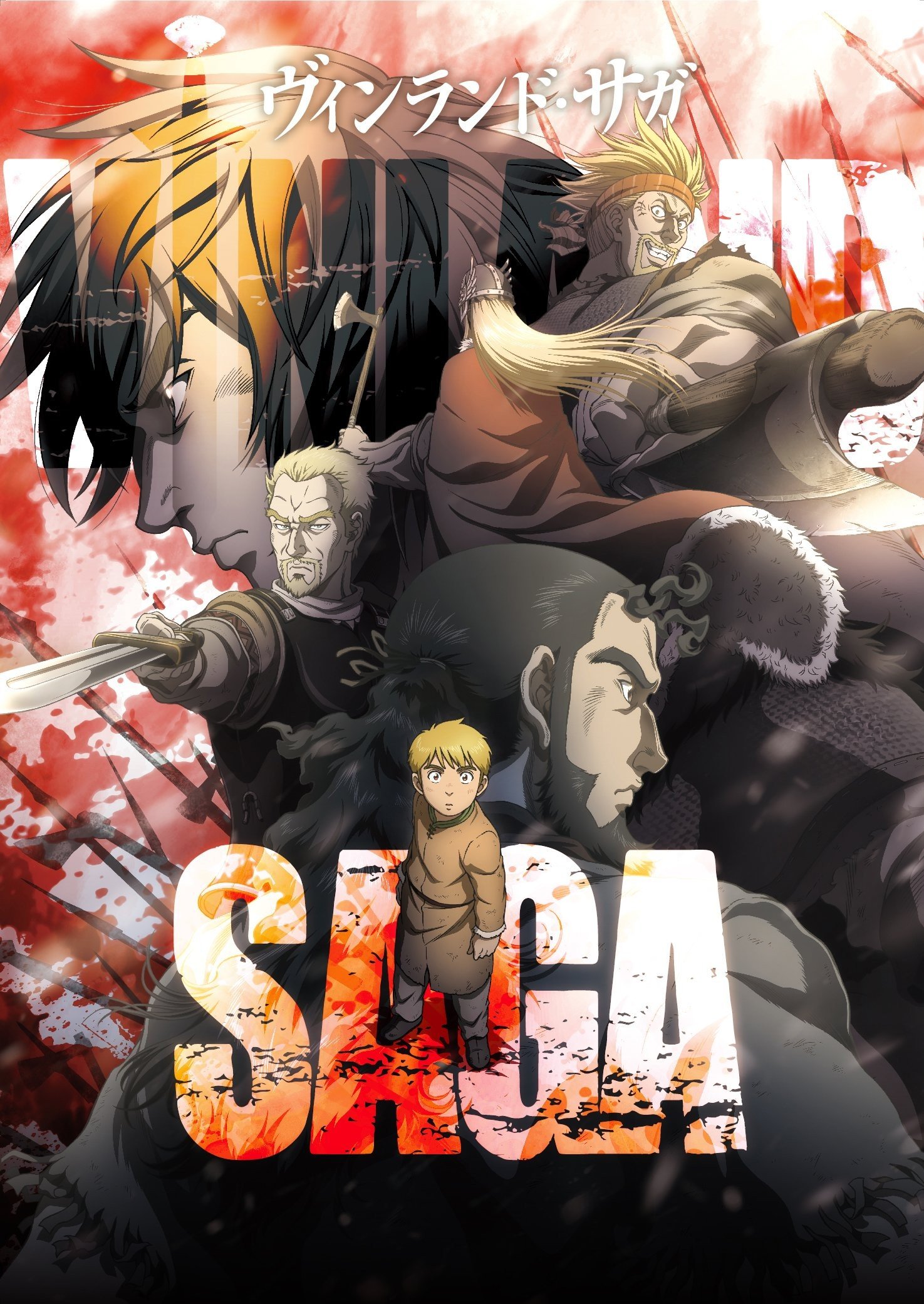
Why Is VINLAND SAGA One of the Most Underrated Epic Works in Recent Years?
When you hear the term “Viking anime,” what likely comes to mind are images of bloody battles and heroism. But VINLAND SAGA uses its two seasons totaling 48 episodes to achieve a nearly impossible narrative transformation: from a revenge tale to anti-war philosophy, from a hot-blooded shonen manga into a literary work exploring human redemption.
This anime adaptation of Makoto Yukimura’s original manga, produced first by WIT STUDIO (Season 1) and then by MAPPA (Season 2), has scored 8.3 and 8.1 respectively on Bangumi. However, these scores fall far short of reflecting its achievements in thematic depth. Let’s delve into why VINLAND SAGA deserves to be regarded as one of the most important anime works of the 21st century.
Season 1: An Anti-Violence Parable Wrapped in Violence
Season 1, which premiered in July 2019 (24 episodes), appears at first glance to be a standard revenge story. Young Thorfinn witnesses his father’s murder by Askeladd and joins his enemy’s mercenary band to pursue revenge, constantly honing his combat skills on the battlefield. WIT STUDIO presents the brutal warfare of the Viking Age with their characteristic fluid animation, making every battle tense and visually striking.
But this is precisely the “trap” Yukimura set. The first half of Season 1 immerses you in the thrill of combat, then gradually reveals in the second half that the very “dueling opportunity” Thorfinn pursues is Askeladd’s means of controlling him. When revenge is finally achieved before Prince Canute, Thorfinn finds himself with nothing—he has lost his father’s teachings, his childhood, his humanity, and ultimately even revenge itself has lost all meaning.
An issue that must be pointed out: Season 1’s pacing does drag somewhat in the middle, particularly during the Francia episodes. But in retrospect, this “slow burn” serves to make Thorfinn’s sense of emptiness more convincing.
Season 2: The Boldest Narrative Shift in Anime History
Season 2, which aired in January 2023 (also 24 episodes), may be the most “anti-commercial logic” sequel of the past decade. The production studio changed from WIT STUDIO to MAPPA, the story setting shifted from battlefield to farm, and the protagonist transformed from vengeful warrior to penitent slave.
The first six episodes contain almost no battle scenes. Thorfinn and fellow slave Einar cultivate wasteland together, and through day after day of farm work, Thorfinn begins to confront the countless lives he has taken. The youth who once moved like a demon on the battlefield now trembles with guilt even when swinging a hoe.
From “True Warrior” to “True Human”
Season 2’s core proposition is extremely simple yet profound: How can a person with blood-soaked hands become “human” again?
Thorfinn’s transformation in the farm arc isn’t a sudden epiphany, but rather pieced together through his friendship with Einar, interactions with farm owner Ketil’s family, and countless nights tormented by nightmares. When he can finally say “I have no enemies,” it’s not naive idealism, but an awakening earned through an entire season of suffering.
MAPPA’s performance this season deserves high praise. They used a more realistic art style to emphasize the texture of “labor”—you can see the texture of soil, feel the weight of chopping trees, experience the cold of winter. This shift in visual language perfectly matches the maturation of themes.
Why Is Season 2’s 8.1 Score Actually a Misjudgment?
To be honest: VINLAND SAGA Season 2 encountered quite a bit of negative feedback when it aired. Many viewers expecting hot-blooded battles were disappointed, finding the “farm arc too boring.” While the 8.1 rating on Bangumi still qualifies as excellent, it declined compared to Season 1’s 8.3.
But this precisely proves the work’s value.
Yukimura and director Shuhei Yabuta made an extremely brave decision: rather than catering to market expectations, they remained faithful to the logic of character growth. If Thorfinn had immediately embarked on new adventures after Season 1 ended, it would merely be continuing to fight on a different stage. Only through the farm arc’s “stagnation” can he truly complete his transformation from warrior to human.
In the long run, Season 2 may be reevaluated as a classic, like Puella Magi Madoka Magica Episode 3 or Code Geass Season 2. The themes it explores—anti-war, atonement, and nonviolent resistance—are particularly relevant in today’s world.
Technical Aspects: Different Interpretations by Two Studios
WIT STUDIO’s Sharp Aesthetic (Season 1)
WIT continued in Season 1 the style they established with Attack on Titan: sharp lines, dynamic storyboards, and combat scenes emphasizing impact. Askeladd and Thorfinn’s confrontation in the snow, the grandeur of the Welsh siege battle—all showcase the highest standards of industrialized anime production.
MAPPA’s Rustic Realism (Season 2)
MAPPA chose a more modest direction. Character animation focused more on facial details (the change in Thorfinn’s eyes from emptiness to rekindled hope is moving), and background art emphasized the Nordic natural environment. Particularly noteworthy is Season 2’s sound design—farm tools clanking, wheat field winds, cabin hearth fires—these everyday sound effects create an atmosphere completely different from Season 1.
Both styles serve their respective seasons’ themes, and this “adaptive” production attitude deserves praise.
Comparing VINLAND SAGA with Other Epic Works
In anime history, works truly deserving to be called “epic” can be counted on one hand. Legend of the Galactic Heroes explores politics and history, Mushishi focuses on humanity and nature, Cowboy Bebop is an existentialist road movie. VINLAND SAGA, against the backdrop of the Viking Age, completes a profound meditation on “the cost of violence” and “the possibility of peace.”
It forms an interesting contrast with Attack on Titan. Both works involved WIT STUDIO in production (both later transferred to MAPPA), both explore the cycle of war and hatred, but reach completely different conclusions. If Attack on Titan ultimately arrives at tragic inevitability, VINLAND SAGA strives to find possibilities beyond hatred—even if that path is fraught with difficulty.
The Metaphor of “Vinland”: The Eternal Promised Land
The “VINLAND” in the work’s title is the legendary fertile continent of the Vikings, generally believed to be somewhere in North America. For Thorfinn, Vinland initially is the peaceful land his father Thors described, a dream of escaping war.
But as the story develops, the meaning of “Vinland” continually evolves. It’s not just a geographical destination, but a spiritual utopia—a place without slaves, without war, where everyone can live freely. At Season 2’s conclusion, Thorfinn resolves to go to Vinland to build such a society. This isn’t naive fantasy, but a conviction earned through blood and tears.
This setup elevates VINLAND SAGA beyond a personal growth story into a parable about the possibilities of human civilization.
Notable Supporting Characters
Askeladd: A Complex Existence, Both Enemy and Father
The most successful character portrayal in Season 1. He is simultaneously Thorfinn’s father’s murderer and his de facto mentor. The contradiction between his Welsh heritage and Viking identity, his loyalty and betrayal toward Canute, all give this character tremendous depth.
Canute: From Timid Prince to Ruthless Monarch
Canute’s transformation is the most tragic in the entire work. After his awakening in Season 1, he resolves to build a “paradise on earth,” but in Season 2, he becomes unscrupulous for his ideals, ultimately becoming an existence Thorfinn must oppose. This “corruption of idealism” is more alarming than simple villainy.
Einar: The Extraordinary Power of an Ordinary Person
Einar may be the most “normal” character in the entire work, but his kindness and resilience are key to Thorfinn’s rebirth. His words to Thorfinn, “You’re not a beast, you’re human,” express the core of Season 2.